
BLOG
How Epoxy Gurus Melbourne Works Across Residential and Commercial Flooring Projects Throughout Melbourne
Residential Garage and Home Flooring Conditions
Residential epoxy flooring projects in Melbourne commonly involve garages, driveways, patios, and internal concrete areas within homes. Many older suburban properties contain concrete slabs that have been exposed to decades of vehicle traffic, oil stains, and general surface wear.
In established suburbs such as Blackburn, Hawthorn, and Preston, garages often contain uneven concrete, previous coatings, or surface damage from long-term use. These conditions require detailed preparation before any epoxy system can be applied.
Newer homes in developing areas may have cleaner slabs, but still require mechanical preparation to ensure proper adhesion. Even new concrete can contain surface sealers or curing compounds that need to be removed.
Residential projects also vary in size and layout. Some garages are small single-car spaces, while others are large multi-vehicle areas or combined storage spaces that require more extensive surface work.
Commercial and Industrial Flooring Requirements
Commercial flooring projects across Melbourne often involve warehouses, workshops, factories, retail stores, and hospitality spaces. These environments place different demands on flooring systems compared to residential use.
In industrial areas such as Footscray and parts of Preston, concrete floors are frequently exposed to heavy machinery, pallet movement, and chemical exposure. These conditions require flooring systems that prioritise durability, impact resistance, and ease of cleaning.
Retail and hospitality spaces in inner Melbourne suburbs require a different approach. Appearance, slip resistance, and consistent surface finish become more important due to customer traffic and presentation requirements.
Commercial floors also tend to have larger surface areas, which increases the importance of consistent preparation and application across the entire slab.
Variations in Concrete Condition Across Melbourne
Concrete condition varies significantly depending on the age of the property, its use, and its location. Coastal suburbs such as Frankston and Mornington often have slabs affected by moisture exposure and salt air. Inner suburbs may have older industrial slabs with multiple layers of coatings and repairs.
Residential areas built during different development periods also show variation. Older homes may have concrete that has been exposed for decades without sealing, while newer developments may have smoother but chemically treated surfaces.
These differences affect how epoxy flooring systems are prepared and installed. Surface grinding depth, crack repair requirements, and moisture testing all depend on the condition of the slab.
Understanding these variations is important when assessing how a flooring system will perform over time.
Surface Preparation Across Different Property Types
Surface preparation is consistent in purpose but varies in execution depending on the property type. The goal is always to create a clean, stable, and textured surface that allows epoxy to bond correctly.
Residential garages often require removal of oil stains, paint, or old sealers. Grinding is used to expose clean concrete and create a suitable surface profile.
Commercial floors may require deeper grinding to remove industrial contamination or previous coatings. In some cases, sections of damaged concrete need repair before any coating can be applied.
Dust control is also a major factor in both residential and commercial environments, particularly in occupied properties where work is carried out while surrounding areas remain in use.
Environmental Factors Affecting Flooring Performance
Melbourne’s varied climate influences how concrete behaves across different regions. Coastal suburbs experience higher humidity and salt exposure, while inland areas may have more stable but still variable conditions.
Temperature changes throughout the year can also affect concrete expansion and contraction. This movement can influence existing cracks and surface conditions before flooring work begins.
Moisture remains one of the most important factors in all locations. Whether in residential garages or commercial warehouses, moisture within the slab must be considered before installation.
Environmental conditions are assessed alongside the physical condition of the concrete to determine the most suitable preparation and flooring approach.
Consistency Across Different Project Types
While each project differs in scale and condition, the core principles of epoxy flooring remain consistent. Proper preparation, correct assessment of the slab, and attention to surface detail are required across all property types.
Residential and commercial projects both rely on the same fundamental process, but the level of preparation and system selection changes based on use, traffic, and environmental exposure.
Across Melbourne, this variation is what defines epoxy flooring work in practice. Each surface requires individual assessment rather than a uniform approach, ensuring the flooring system matches the conditions it will operate in over time.
DISCOVER WHAT OUR CUSTOMERS HAVE TO SAY ABOUT US
REVIEWS
REVIEW US ON GOOGLE
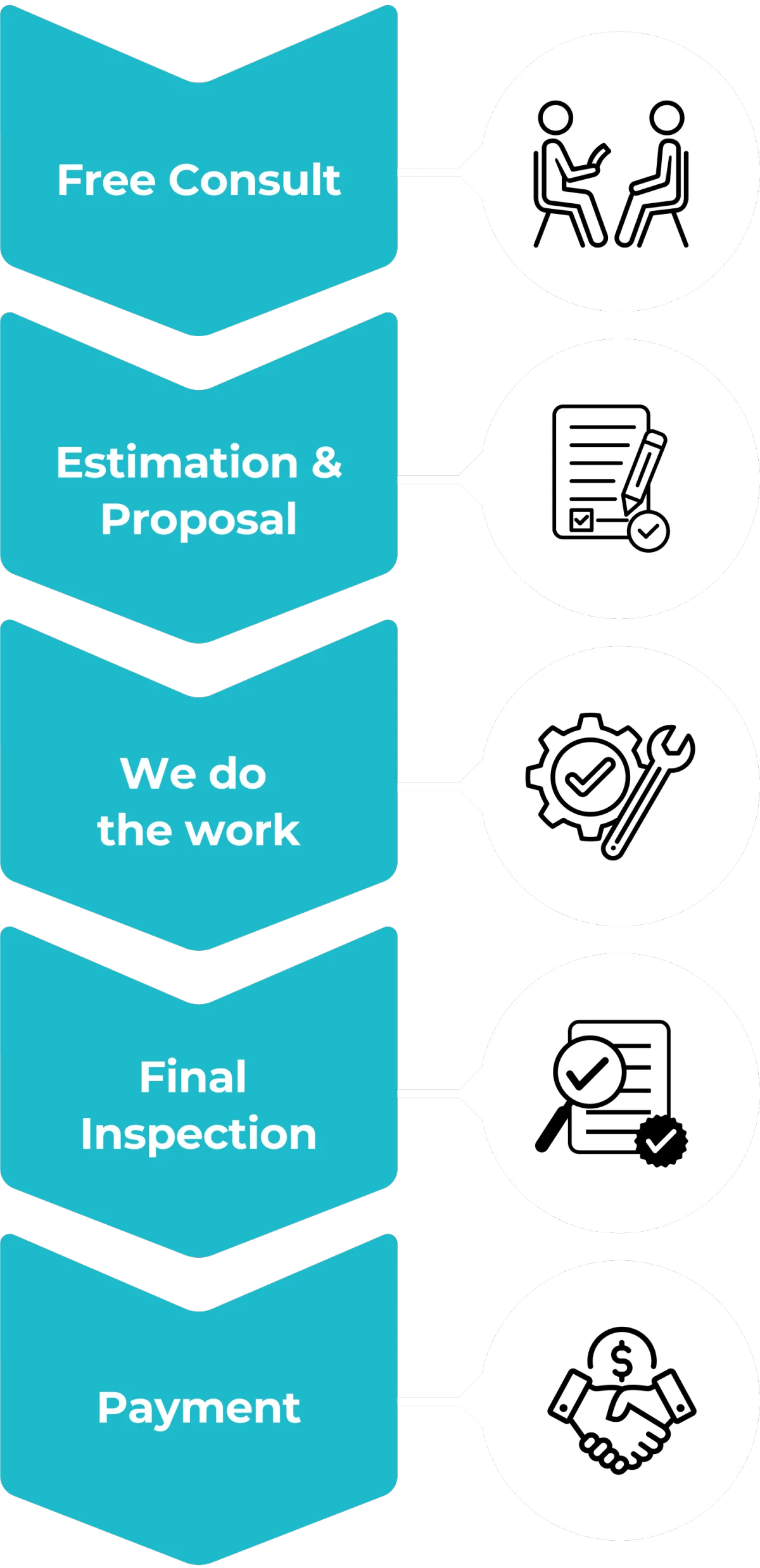
our process
Our process is simple and only contains a few simple steps

READY TO take the next step?
get a free quote TODAY!

